


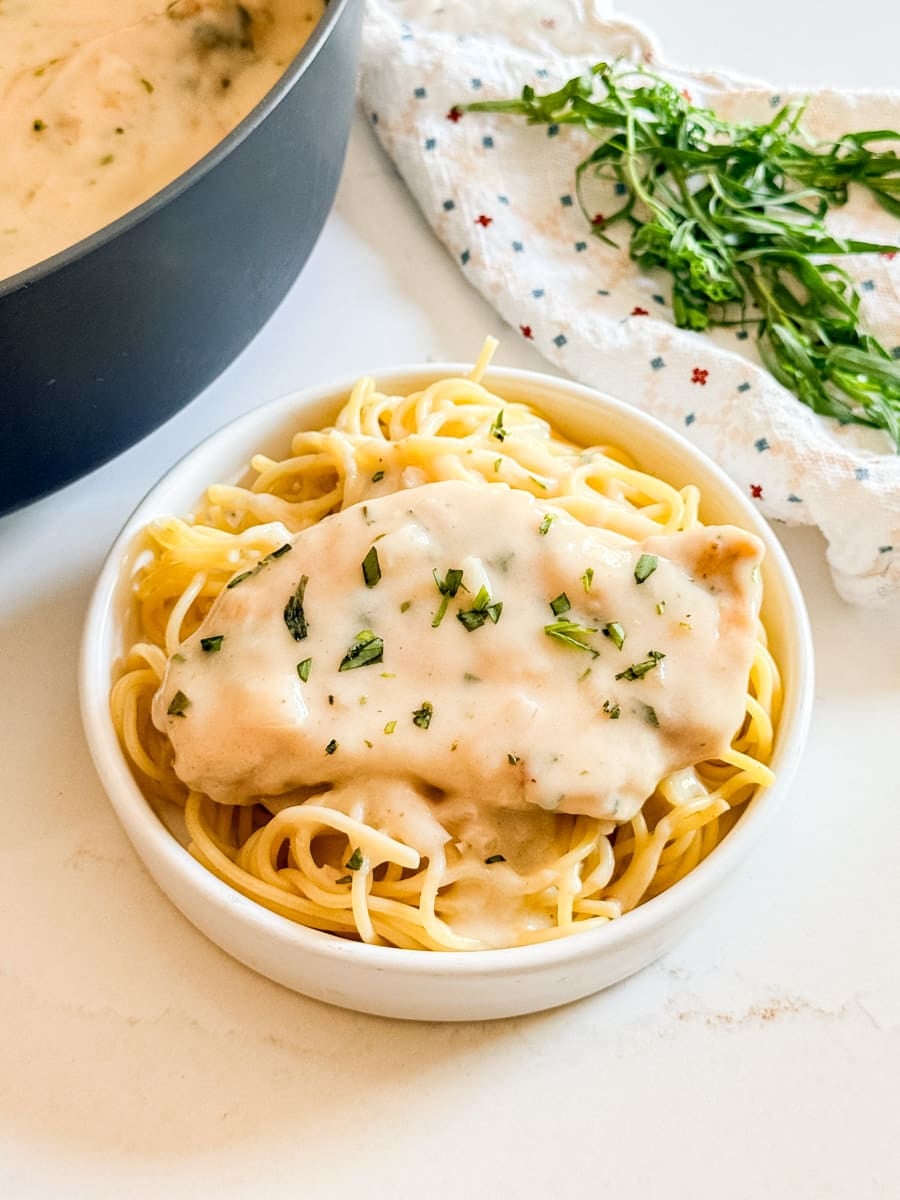
Rich, creamy, and super easy to make, this tarragon chicken recipe is a weeknight dinner that's as quick and comforting as it is delicious. Ready in just 35 minutes!
Jump to:
Why You'll Love This Recipe For Chicken With Tarragon
This recipe is loosely inspired by one I found in an old New York Times cookbook, though that one was for a whole roasted chicken. The flavors sounded fantastic, so I created my own version of chicken tarragon, and it came together nicely on the very first test.
Tarragon has a pretty distinct flavor, kind of like a subtle black licorice note, and while that's polarizing for some people, I think it plays really nicely off the other flavors here. Not a fan? Swap it out for lemon thyme or oregano instead. But if you love it as much as I do, here's why this chicken with tarragon is a must-try:
- Perfect over pasta
- Rich and creamy
- Quick weeknight dinner
- Customizable
Ingredient Information and Substitutions
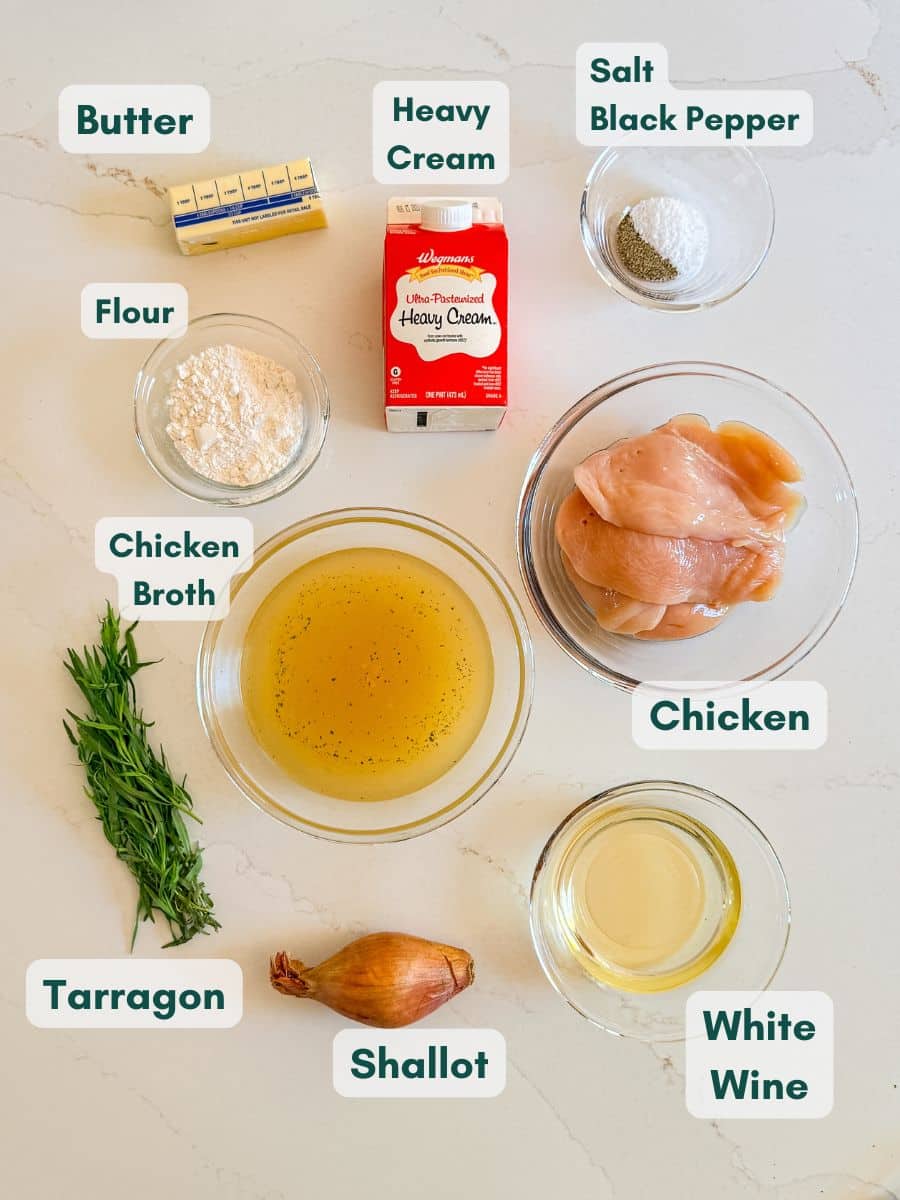
- Chicken breasts- Filleted into thinner cutlets so they cook quickly and evenly.
- Pasta- The base for soaking up all that extra sauce. Any pasta shape works, though spaghetti or angel hair are great choices.
- Flour- Helps create a golden crust on the chicken and thickens the sauce. Substitute with gluten free 1:1 flour like King Arthurs.
- Shallots- Add a delicate, savory flavor to the sauce. Onions work too, though the flavor will be slightly stronger.
- Chicken broth- Forms the base of the creamy sauce.
- White wine- Deglazes the pan and adds depth to the sauce. Extra chicken broth works as a non-alcoholic substitute.
- Heavy cream- Brings richness and body to the sauce. You can also use half-and-half for a lighter substitute.
- Salted butter- Helps brown the chicken and build the sauce, adding richness to both. Unsalted butter works as well, with a pinch of salt added.
- Fresh tarragon- Brings a distinct, subtly licorice-like flavor to the dish. Lemon thyme or oregano work well as substitutes if tarragon isn't your favorite.
- Kosher salt- Enhances all the other flavors in the dish.
- Black pepper- Adds warmth to round out the seasoning.
How To Make Chicken In A Tarragon Sauce
Step 1- Pound the chicken.
While the pan heats, place the filleted chicken breasts on a cutting board, cover with plastic wrap, and pound to ¼-inch thickness.
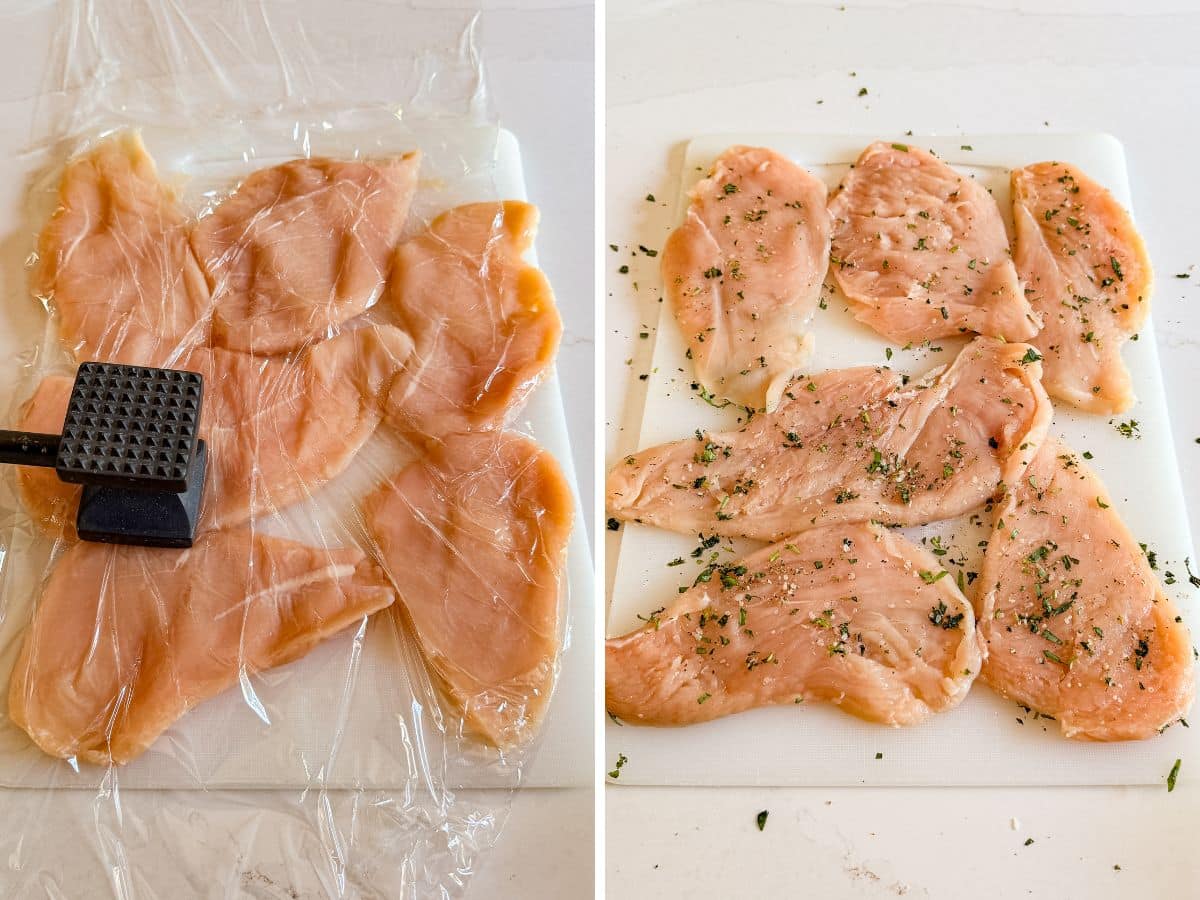
Step 2- Season and dredge.
Season the chicken with salt, pepper, and chopped tarragon. Place the flour in a shallow bowl and dredge the chicken, tapping off the excess.
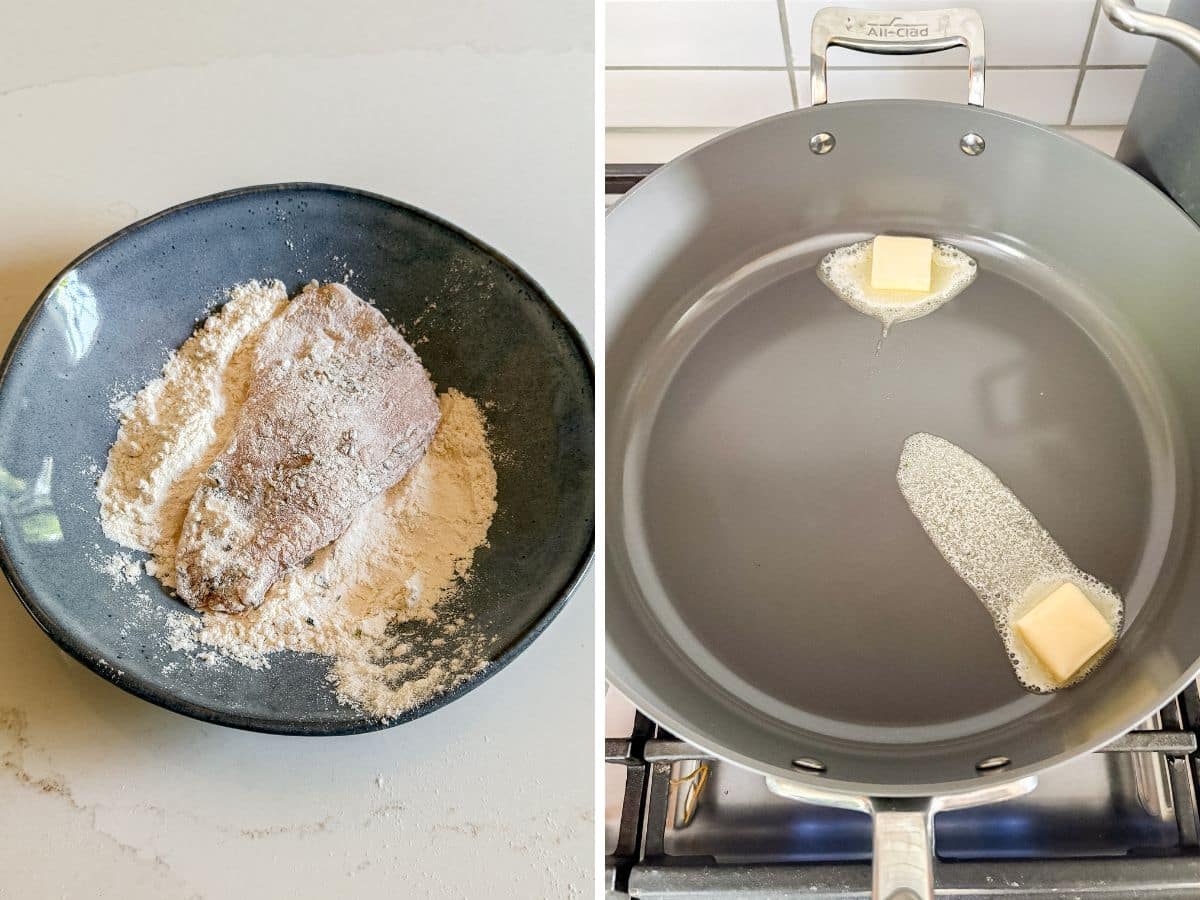
Step 2- Melt the butter.
Melt 2 tablespoons of butter in a large skillet over medium to medium-high heat.
Step 4- Cook the chicken.
Cook the chicken for 2 to 3 minutes per side until golden brown, working in batches as needed, then remove to a plate.
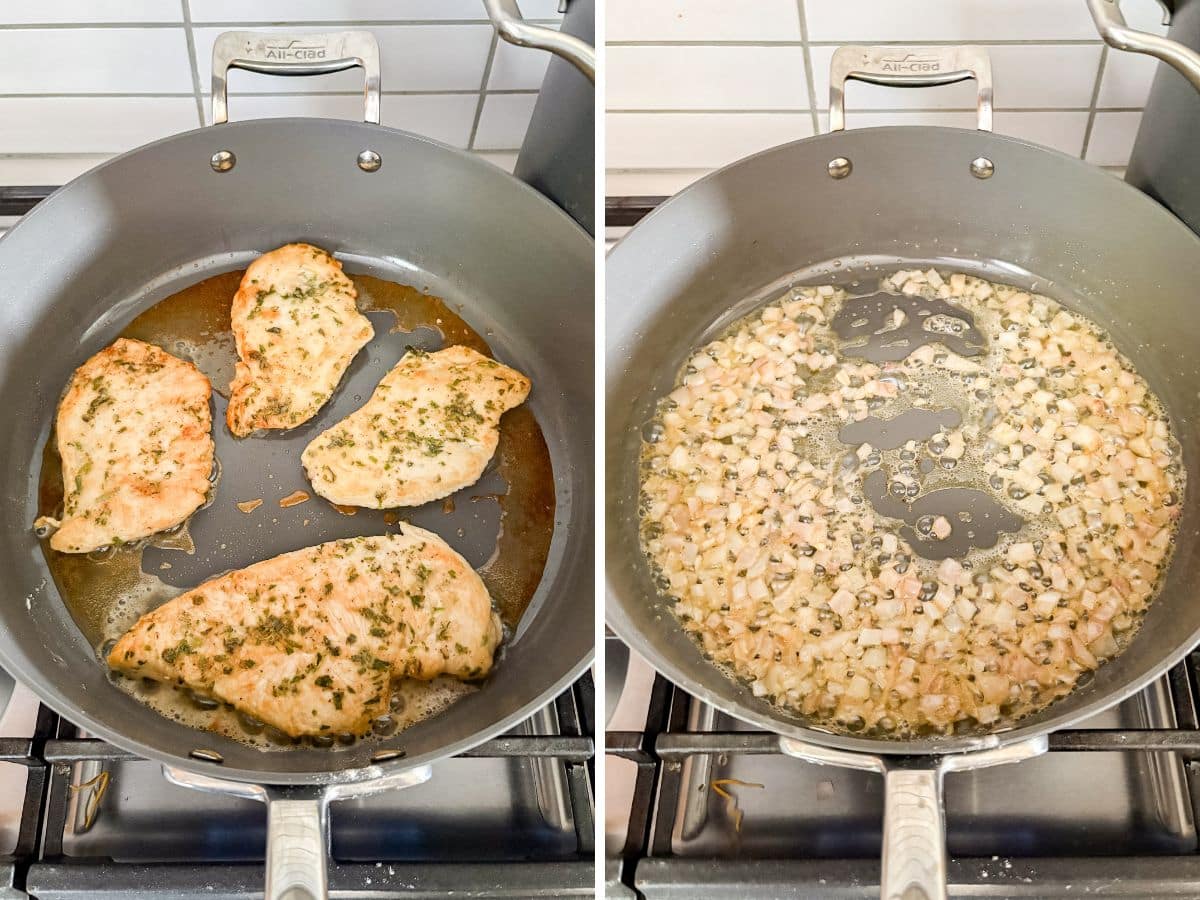
Step 5- Build the roux.
Melt 4 more tablespoons of butter in the pan and sauté the shallots for about a minute until softened. Stir in the remaining flour until no lumps remain, then sauté another minute until fragrant.
Step 6- Simmer the sauce.
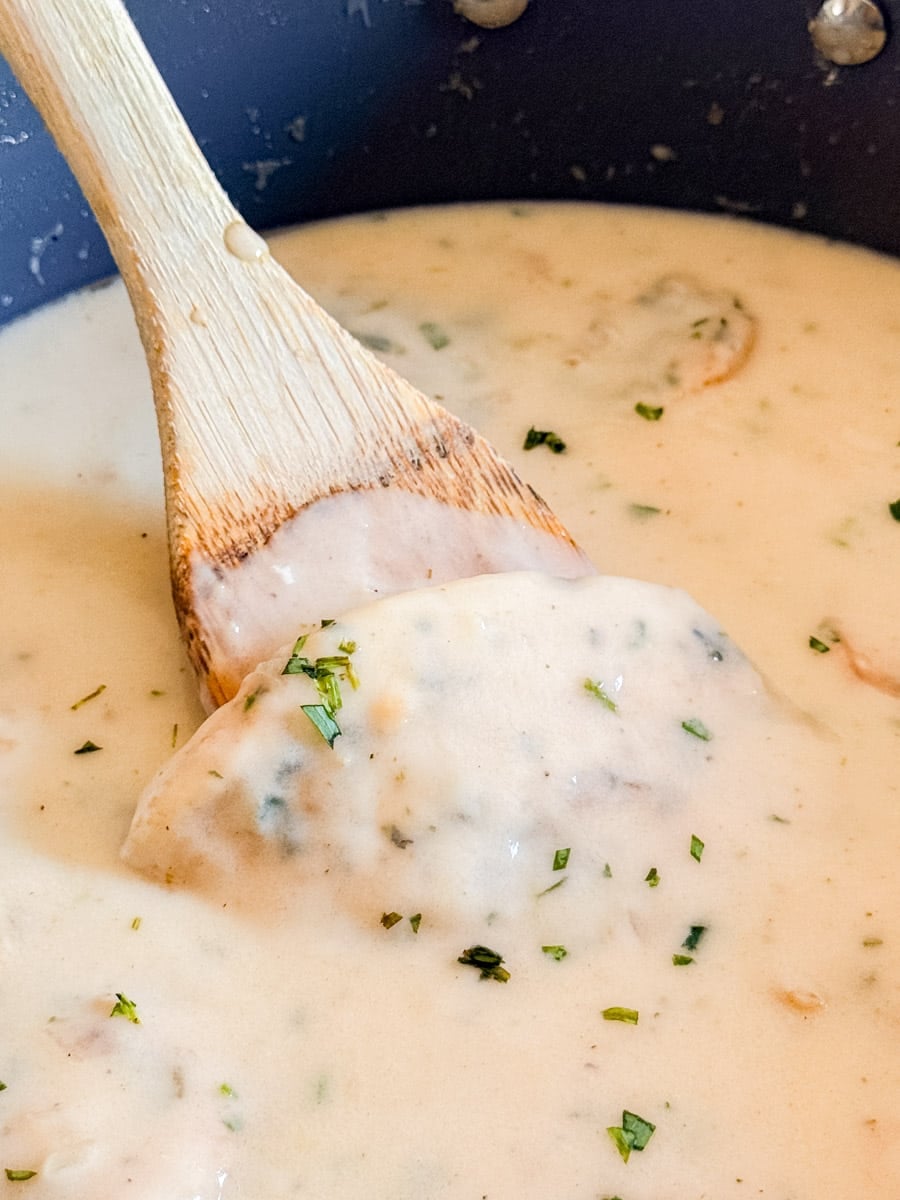
Add the wine to deglaze the pan, then stir in the chicken broth and heavy cream. Reduce the heat to medium and simmer for 5 minutes.
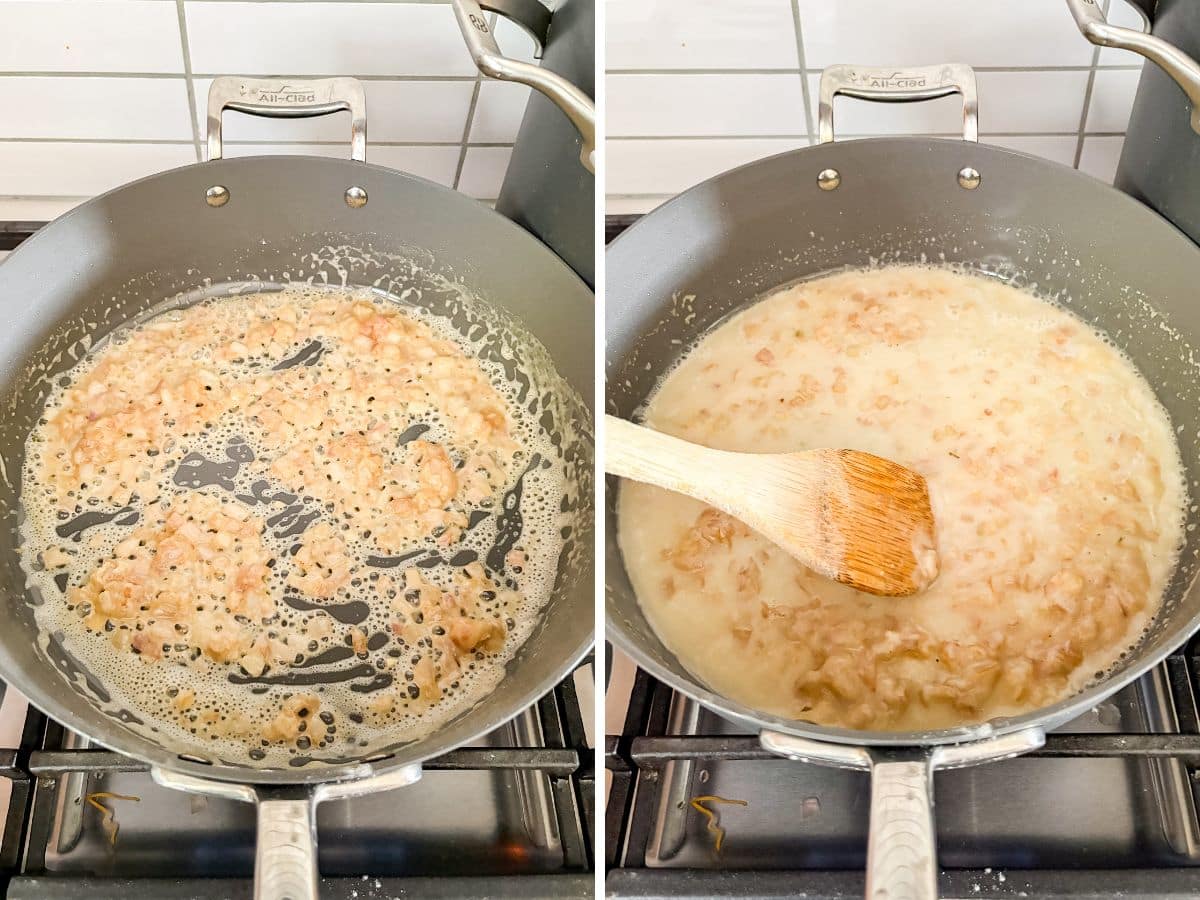
Step 7- Season, finish, and serve.
Stir in the remaining salt, pepper, and tarragon, then add the chicken back to the pan and simmer for another 5 minutes. Serve immediately over pasta.
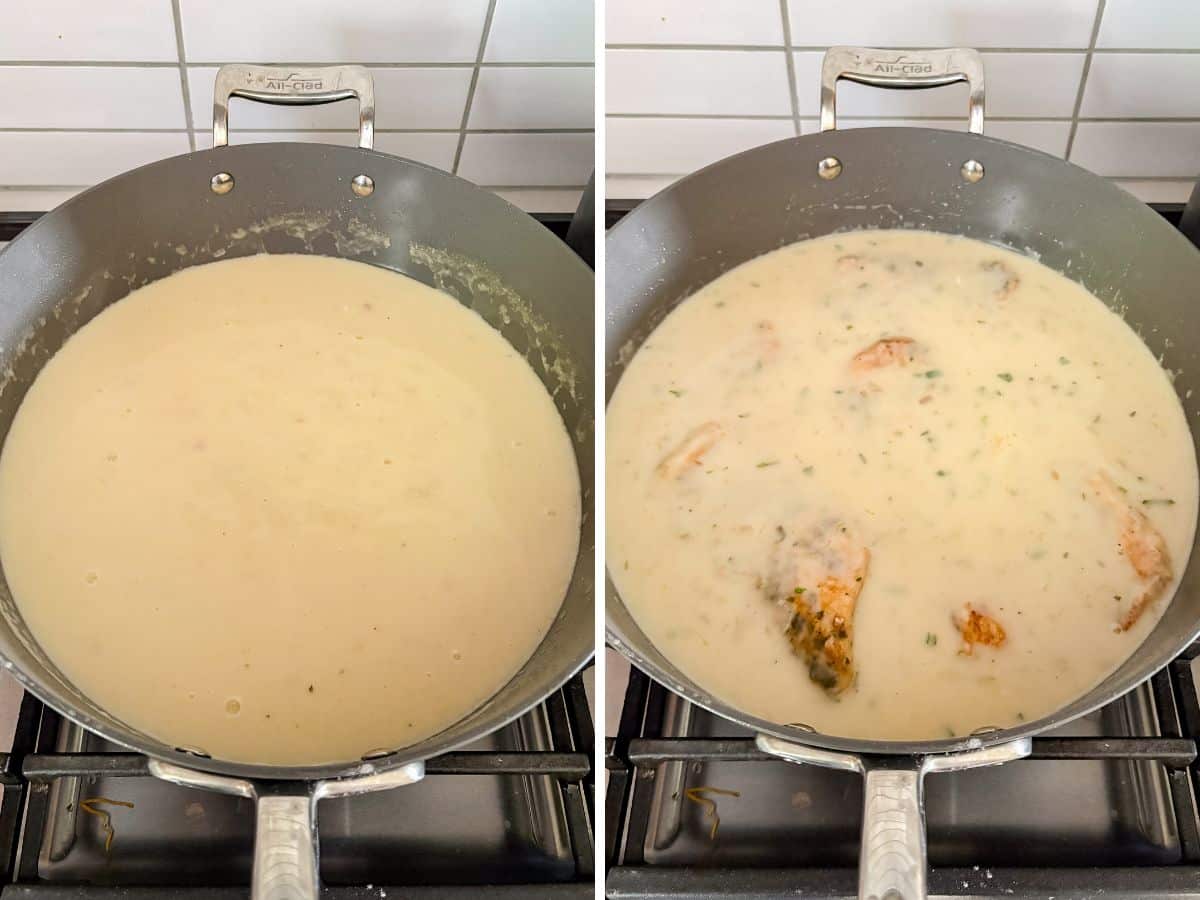
Frequently Asked Questions
Tarragon has a subtle, slightly sweet flavor with hints of anise or black licorice, which might sound unusual but blends beautifully into a creamy sauce like this one.
Yes, just cook the chicken in batches so the pan isn't overcrowded, and make sure to double the sauce ingredients too!
This dish is best made fresh, since like most cream sauces, it's at its best when served immediately. Leftovers are still tasty, but the cream can separate a bit after chilling.
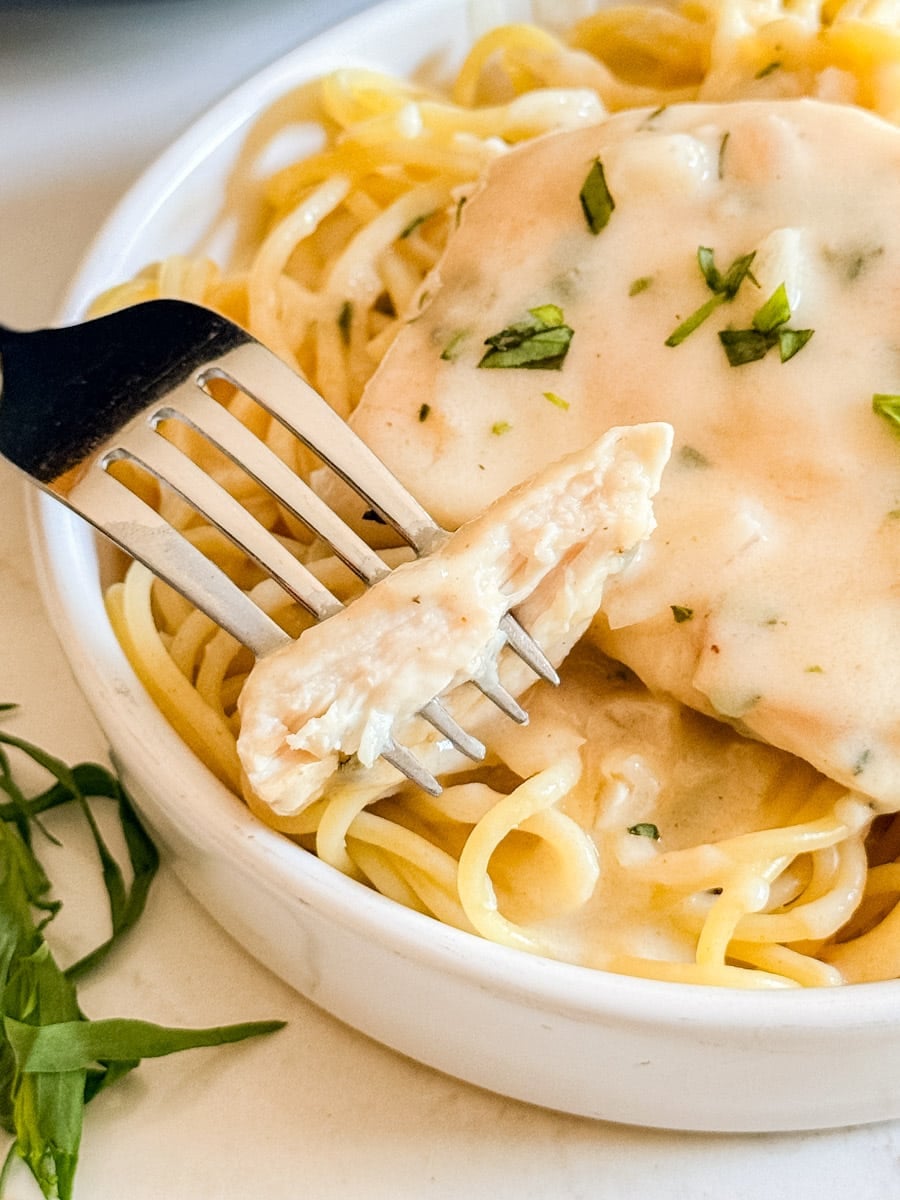
Tips For Making Chicken And Tarragon Sauce
- Use a meat mallet to pound the chicken, or a rolling pin if you don't have one on hand.
- Season the chicken before dredging it in flour, so the flavor gets locked in underneath the coating.
- If the pan starts to look dry while browning the chicken, feel free to add a touch more butter to keep things from sticking.
- Don't sear the chicken for more than 2 to 3 minutes per side at first. It doesn't need to be fully cooked yet, since it finishes in the sauce later.
- Serve this right away for the best texture, since the cream sauce can separate slightly after being chilled and reheated.
- Ingredients to prep ahead- Mince the shallots and chop the tarragon up to a day in advance. Bring a pot of water to boil before getting started so the pasta cooks at the same time.
- Leftovers and storage- Store in an airtight container in the fridge for up to 3 days.
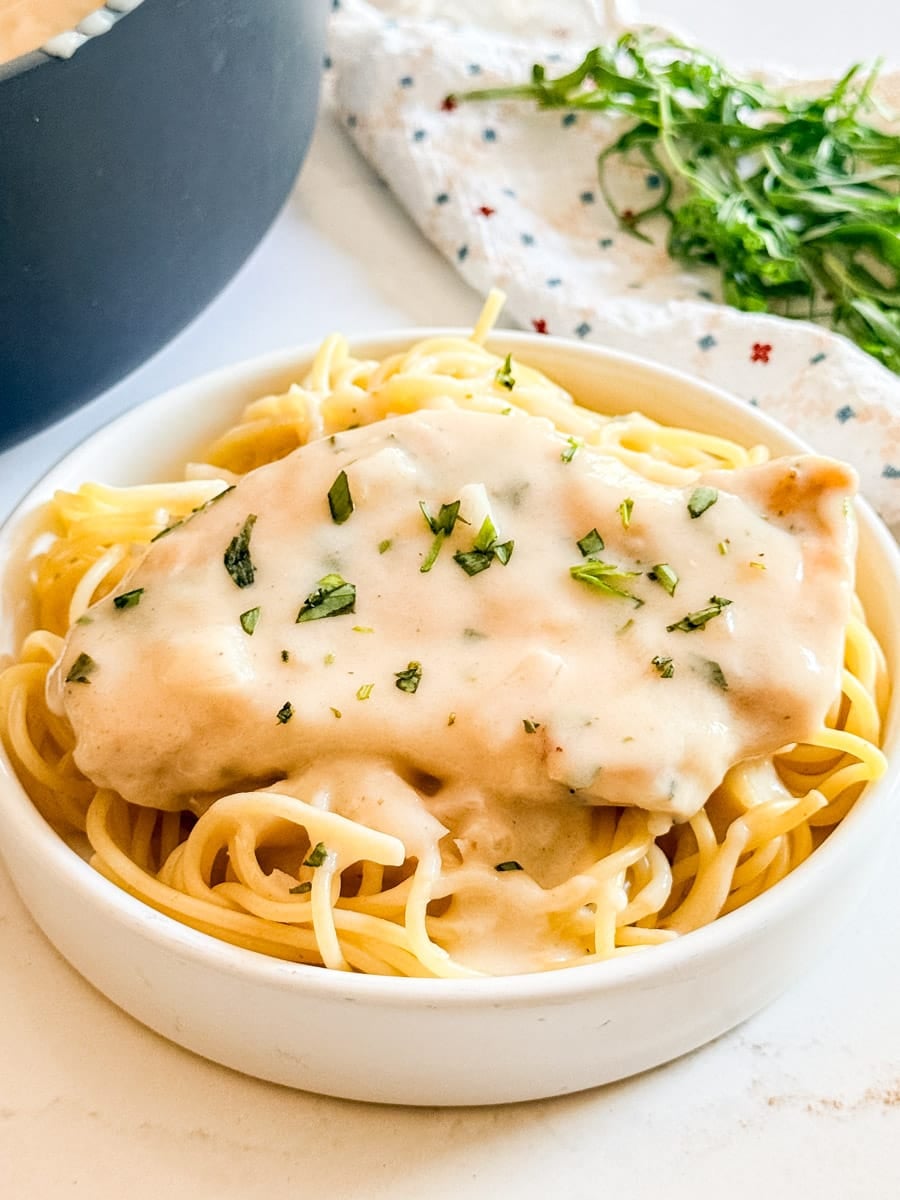
What To Serve With Chicken With Tarragon Sauce
I love serving this over a bed of pasta with a simple side and something sweet to round out the meal. Here are some of my favorite pairings:
- Couscous Tabouli Salad
- Easy Deviled Eggs
- Harvest Cranberry Cheeseball
- Moist Banana Chocolate Chip Muffins
Other Chicken Recipes To Try


Love this recipe? Please leave a 5 star ⭐️⭐️⭐️⭐️⭐️ rating in the recipe card below ⬇️ and/or a review in the comment section further down. Check out my Amazon Store for all my favorite tools, including those used in this recipe. And follow @thelifejolie on Instagram and TikTok!
Tarragon Chicken Recipe
Equipment
Ingredients
- 6 Tablespoons salted butter, divided
- 3 boneless skinless chicken breasts, filleted (slice each piece horizontally into 2 even pieces, so 6 pieces total)
- 2 teaspoons fresh tarragon chopped and divided (or any other fresh herb of your choice)
- 1 teaspoon kosher salt, divided
- ½ teaspoon ground black pepper, divided
- ¾ cup flour, divided
- ¼ cup shallots, minced
- ¾ cup white wine
- 2 cups chicken broth
- ⅓ cup heavy cream
- pasta of your choice, cooked to al dente as per package directions
Instructions
- Melt 2 Tablespoons butter in a large skillet over medium-medium high heat.
- While the butter melts, place the filleted chicken breasts onto a cutting board and cover with plastic wrap. Pound to ¼ inch uniform thickness with a meat mallet.
- Season the chicken pieces with ½ teaspoon salt, ¼ teaspoon pepper and 1 teaspoon chopped fresh tarragon.
- Place ½ cup flour in a shallow bowl and dredge the chicken pieces in the flour, lightly tapping off the excess.
- When the butter is fully melted and covering the bottom of the skillet, cook the chicken pieces for around 2 minutes per side until golden brown and remove from the pan into a side plate. Work in batches so you don't overload the pan and if it seems to be drying out, feel free to add a bit more butter.
- Once the chicken is removed from the pan, melt remaining butter. BOil pasta per package directions.
- Add the shallots to the pan and sauté for around a minute to soften, stirring frequently.
- Stir in 4 tablespoons flour until there are no more lumps. Sauté for another minute until fragrant.
- Add wine and deglaze the pan for 2 minutes. Then add chicken broth and heavy cream and stir to fully combine.
- Reduce the heat to medium and simmer the sauce for 5 minutes until thickened.
- Add remaining salt, black pepper and chopped tarragon to the pan and stir to combine.
- Add the chicken back into the pan and simmer for another 5 minutes. Serve immediately over pasta.
Video
Notes
- Use a meat mallet to pound the chicken, or a rolling pin if you don't have one on hand.
- Season the chicken before dredging it in flour, so the flavor gets locked in underneath the coating.
- If the pan starts to look dry while browning the chicken, feel free to add a little more butter to keep things from sticking.
- Don't sear the chicken for more than 2 to 3 minutes per side at first. It doesn't need to be fully cooked yet, since it finishes in the sauce later.
- Serve this right away for the best texture, since the cream sauce can separate slightly after being chilled and reheated.
- Ingredients to prep ahead- Mince the shallots and chop the tarragon up to a day in advance. Bring a pot of water to boil before getting started so the pasta cooks at the same time.
- Leftovers and storage- Store in an airtight container in the fridge for up to 3 days.
Leave a Reply